Trading indicators are tools that help traders analyze price movements and understand what is happening in financial markets. They are based on historical data such as price, volume, and volatility, and are used to highlight patterns that are not always visible at first glance.
Traders rely on indicators because they support decision-making in different ways. They help identify trends, suggest possible entry and exit points, and confirm signals from other analysis methods. This makes trading more structured and reduces emotional decisions, especially in fast-moving markets. Many traders search for the most used trading indicators to build a solid foundation for their strategies.
There is no single perfect tool, but some indicators are widely recognized as the best trading indicators depending on trading style and market conditions. Their effectiveness often depends on how they are combined rather than used alone.
At the same time, traders often discuss the idea of most accurate trading indicators, although accuracy in trading is always relative and depends on strategy, timeframe, and risk management.
In this article, we will compare popular options, explain how different indicators work in practice, and give beginner-friendly recommendations to help you choose the right tools for your trading approach.
What Are Trading Indicators?
Trading indicators are tools used in technical analysis that help traders understand market behavior and price movement. A trading indicator is a mathematical calculation based on price, volume, or volatility that is displayed on a chart to make market data easier to interpret.
In practice, trading indicators are used to analyze trends, momentum, and possible reversals in the market. They help traders turn raw price information into clear visual signals, which makes decision-making more structured and less emotional.
The main purpose of trading indicators used for market analysis is to support trading decisions. They are applied to identify trend direction, confirm signals from price action, and improve timing for entries and exits.
Overall, the use of indicators in trading is not to predict the market with certainty, but to provide additional context that helps traders make more informed choices.
How Trading Indicators Work
Understanding trading indicators work starts with the fact that they are based on formulas applied to historical market data such as closing prices, highs, lows, and trading volume.
In simple terms, how trading indicators work is by converting this raw data into visual elements like lines, histograms, or zones on a chart. These visual signals help traders quickly identify whether the market is trending, consolidating, or losing momentum.
Because of this structure, trading indicators work as analytical tools that simplify complex market behavior and make it easier to build trading strategies based on objective data rather than guesswork.
Best Trading Indicators (Top & Most Popular in 2026)
The best trading indicators are tools that help traders analyze price movement and make more informed decisions in different market conditions. There is no single perfect option, but some indicators consistently rank as top trading indicators because they are simple, widely tested, and effective across different strategies.
When looking at the most popular trading indicators, it becomes clear that traders often prefer tools that are easy to read and provide clear signals. These are also usually the most used trading indicators in both beginner and professional trading systems.
Below are the main categories of indicators that dominate modern trading in 2026.
Trend-Following Indicators
Trend-following tools help traders identify the overall direction of the market and stay aligned with it.
Moving Averages (SMA, EMA) smooth price data and help identify trend direction over different timeframes. They are widely used to filter market noise and confirm trends.
MACD (Moving Average Convergence Divergence) measures momentum and trend strength at the same time, making it useful for spotting trend changes.
ADX (Average Directional Index) shows how strong a trend is, without indicating direction, which helps traders avoid weak or sideways markets.
Momentum Indicators
Momentum indicators measure the speed of price movements and help identify overbought or oversold conditions.
RSI (Relative Strength Index) is used to detect whether an asset is potentially overbought or oversold, helping traders time reversals or corrections.
Stochastic Oscillator compares closing price to a recent price range and is often used to spot short-term turning points in the market.
Volatility Indicators
Volatility indicators measure how much the price is moving, helping traders understand market conditions.
Bollinger Bands expand and contract based on volatility, showing when the market is calm or highly active.
ATR (Average True Range) measures market volatility in numeric form, helping traders set stop-loss levels and manage risk more effectively.
Most Accurate Trading Indicators (Reality vs Myth)
The idea of most accurate trading indicators is very popular among beginners, but in reality no single tool can consistently predict the market with perfect accuracy. Indicators are designed to interpret price data, not to guarantee outcomes.
Many traders search for most reliable trading indicators or ask which trading indicator is most accurate, hoping to find one “best” solution. In practice, accuracy depends more on how indicators are used together, market conditions, and risk management than on any single tool.
Why No Indicator Is 100% Accurate
The market is constantly changing, which means no indicator can stay perfectly reliable in all situations. One of the main reasons is market conditions. Indicators may work well in trending markets but give false signals in sideways or highly volatile conditions.
Another important factor is the difference between lagging vs leading indicators. Lagging indicators react to price movement after it happens, which makes them more reliable for confirmation but slower for entries. Leading indicators try to predict moves earlier but often generate more false signals. This balance is why no single indicator can be fully accurate on its own.
Best “Accuracy Combo” Strategy
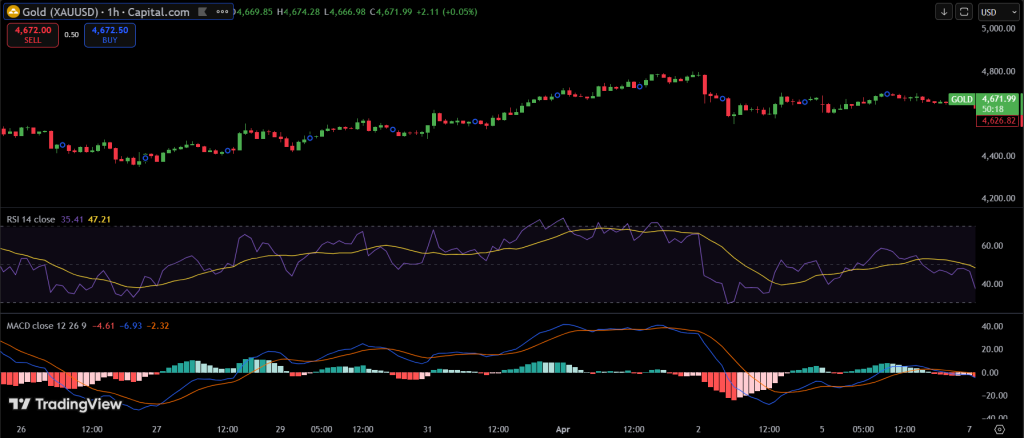
Instead of relying on one tool, traders often improve results by combining indicators into a system. A common approach is combining RSI + MACD + Moving Averages.
In this setup, Moving Averages help define the main trend direction, MACD confirms momentum shifts, and RSI provides timing signals for potential overbought or oversold conditions. When used together, they create a more balanced view of the market and help reduce false signals compared to using a single indicator alone.
Most Effective Trading Indicators (Used by Professionals)
The most effective trading indicators are those that help professional traders make consistent decisions across different market conditions. Instead of relying on a single tool, professionals focus on systems that combine multiple signals for confirmation.
Many traders also look for the most powerful trading indicators, but in real trading power comes from how indicators are used together, not from one isolated tool. Professionals usually combine trend, momentum, and volatility indicators to build a more complete market view.
Indicator Combinations That Work Best
One of the most common approaches among professionals is a trend + momentum setup. In this method, trend indicators like Moving Averages define the market direction, while momentum tools like RSI or MACD confirm whether the move is strong enough to continue.
Another effective approach is a breakout confirmation setup. Here, indicators are used to validate price breaking key levels, helping traders avoid false breakouts and enter trades with better timing and confirmation.
Best Trading Indicators for Beginners
The best trading indicators for beginners are simple, easy to understand, and widely used. Beginners should focus on learning how price behaves with a few basic tools instead of overcomplicating their charts.
Simple Starter Setup
A basic and effective combination includes:
EMA (trend) – helps identify the overall market direction and smooths price action.
RSI (overbought/oversold) – shows potential reversal zones and helps with timing entries.
Volume – confirms the strength behind price movements.
This simple setup gives beginners a balanced view of trend, momentum, and participation without overwhelming complexity.
Common Beginner Mistakes
One of the most frequent mistakes is overloading charts with too many indicators. This often leads to confusion and conflicting signals instead of clarity.
Another common issue is relying on one indicator only. No single tool is enough to understand the market fully, so combining a few simple indicators is always more effective than depending on just one.
Trading Indicators Ranking (Practical View)
The trading indicators ranking below is based on real-world usage, simplicity, and how often traders rely on them in different market conditions. Instead of focusing on theory, this ranking reflects how tools are actually applied in day-to-day trading.
The most used trading indicators tend to be simple, versatile, and effective across multiple strategies, from scalping to long-term trading.
1. Moving Averages
Moving Averages are the foundation of many trading strategies. They help identify trend direction, smooth price action, and filter out market noise. Because of their simplicity and flexibility, they are used by almost every type of trader.
2. RSI (Relative Strength Index)
RSI is one of the most popular momentum tools. It helps identify overbought and oversold conditions, making it useful for timing entries and spotting potential reversals.
3. MACD (Moving Average Convergence Divergence)
MACD combines trend and momentum analysis. It is widely used to confirm trend changes and measure the strength of price movement.
4. Bollinger Bands
Bollinger Bands measure volatility and help traders understand whether the market is expanding or contracting. They are especially useful for breakout and mean-reversion strategies.
5. Volume Indicators
Volume indicators show the strength behind price movements. They help confirm whether a trend or breakout is supported by real market participation or not.
What Are the Best Trading Indicators Overall?
The what are the best trading indicators question does not have a single universal answer because different markets and strategies require different tools. The best trading indicators are those that match your trading style, timeframe, and risk approach rather than a fixed “perfect” list.
In practice, indicators work best as support tools for price action, not as standalone decision systems. Their value comes from how they are applied within a clear trading strategy.
Final Practical Answer
The best trading indicators always depend on the trading approach:
- Scalping usually relies on fast signals like EMA, RSI, and volume tools
- Swing trading often combines MACD, RSI, and Moving Averages for trend and momentum
- Trend-following strategies focus more on Moving Averages and ADX to stay aligned with long-term direction
This means there is no single best option for everyone, only the most suitable combination for a specific strategy.
Conclusion
There is no single perfect indicator that works in all market conditions. The main idea is that no single “perfect” indicator exists, because markets are dynamic and constantly changing.
The best results come from combining tools rather than relying on one. This is why most accurate trading indicators are always context-dependent and should be evaluated based on market conditions and strategy.
In the end, the most effective trading indicators are not the most complex ones, but the ones that fit your system and are used consistently.
The final takeaway is simple: in trading, simplicity usually beats complexity.
FAQ
What are the most used trading indicators?
The most used trading indicators in trading include Moving Averages, RSI, MACD, and Bollinger Bands. These tools are popular because they are easy to apply, work in different market conditions, and are commonly used in both beginner and advanced trading strategies.
What are the most accurate trading indicators?
The idea of most accurate trading indicators is a misconception because no indicator is perfectly accurate. All indicators have limitations and depend on market conditions. In practice, better results come from combining several indicators rather than relying on one.
Which trading indicator is most accurate?
When asking which trading indicator is most accurate, the answer depends on the strategy and market environment. There is no single best option, but combinations like RSI and MACD are often used together because they help confirm signals and reduce false entries.
Do trading indicators actually work?
Yes, do trading indicators work in the sense that they help traders analyze price data and identify potential trends or signals. However, they do not predict the market and usually lag behind price movements, so they should always be used with confirmation and risk management.
What is the best trading indicator for beginners?
The best trading indicators for beginners are simple tools like EMA for trend direction, RSI for momentum conditions, and Volume for confirmation. This combination helps new traders understand basic market structure without unnecessary complexity.


