

The financial world is dominated by a juggernaut that operates 24 hours a day, five days a week: the foreign exchange market. As the largest and most liquid financial arena on the planet, it facilitates a staggering daily trading volume exceeding $7.5 trillion, a figure that eclipses the combined volume of all global stock markets. Within this immense landscape, participants engage in currency trading, seeking to profit from the fluctuating values of national economies. To understand this dynamic environment, one must first establish what is forex trading. At its core, it is the act of exchanging one currency for another in the hopes that the price will move in a favorable direction.
However, the methods for participating in this market have evolved. While traditional forex trading involves the direct exchange of currencies, a popular alternative has emerged through the use of derivatives. This brings us to what is CFD trading. A contract for difference explained simply is an agreement between a trader and a broker to exchange the difference in the price of an asset from the time the contract is opened to when it is closed. This form of derivatives trading allows individuals to speculate on price movements of the underlying asset, in this case currency pairs, without ever taking ownership of the asset itself. Consequently, most modern online forex trading is conducted via CFDs, making them a central component of how retail traders access the forex market explained in today’s context.
Because both forex and CFDs are traded on the over-the-counter (OTC) market, a decentralized network of banks, brokers, and traders, they offer unique advantages like high liquidity and the ability to trade on margin. This guide is designed to navigate these concepts in detail. We will break down how does forex trading work in practice, demystify the essential terminology you need to know, and, most critically, explore the risk management strategies required to navigate this volatile space.
What is Forex Trading? Understanding the Currency Market
To grasp the foundations of the global financial system, one must first understand what is forex trading. At its simplest, currency trading involves the simultaneous act of buying one currency while selling another. Currencies are always traded in pairs, such as the euro against the US dollar (EUR/USD), because every transaction requires a participant to go long on one currency and short on another. The objective is to profit from the change in value between the two.
The forex market explained in structural terms is unlike traditional exchanges such as the New York Stock Exchange. There is no central building or physical location where all transactions occur. Instead, forex operates as an over-the-counter (OTC) market, a vast decentralized network of banks, brokers, and financial institutions connected electronically. This structure allows the market to function seamlessly across the globe without a single point of control.
One of the defining characteristics of this global financial market is that it operates as a 24-hour market, opening in Asia on Monday morning and closing in North America on Friday evening. Trading activity moves continuously across the world’s financial centers as they open and close in a rotating cycle. The four major trading sessions are as follows:
- Sydney session. The trading week begins here, often characterized by lower volatility and setting the tone for the Asian trading day.
- Tokyo session. As the first major Asian financial hub to open, this session sees significant activity in pairs involving the Japanese yen and other Asia-Pacific currencies.
- London session. Widely considered the most active period due to the sheer volume of transactions flowing through Europe. This session accounts for the largest share of global forex turnover.
- New York session. Bringing with it high liquidity and significant price movements as US economic data is released. The overlap between the London and New York sessions typically generates the highest trading volume of the day.
A diverse range of participants populates this market. Retail traders represent individual speculators who access the market through brokers using online forex trading platforms. On a larger scale, institutional traders such as hedge funds, investment banks, and multinational corporations trade to hedge risk or generate returns. Overseeing the broader financial stability are central banks, which intervene in the currency markets to manage monetary policy, control inflation, or stabilize their national economies. This combination of participants creates a dynamic and liquid environment that remains the largest financial market in the world.
| Category | Details |
|---|---|
| Market Size | Over $7.5 trillion in average daily trading volume |
| Market Structure | Over-the-counter (OTC), decentralized with no central exchange |
| Trading Hours | 24 hours a day, five days a week (Sunday evening to Friday evening) |
| Major Trading Sessions | Sydney, Tokyo, London, New York |
| Currency Pairs | Major, minor, and exotic pairs |
| Key Participants | Retail traders, institutional traders, hedge funds, multinational corporations, central banks, commercial banks |
| Primary Purpose | Speculation, hedging against currency risk, and international trade settlement |
| Leverage | Commonly available, allowing traders to control larger positions with a smaller capital outlay |
How Does Forex Trading Work? Key Mechanics Explained
To truly understand how does forex trading work, one must move beyond the broad overview and examine the actual mechanics of placing and executing trades. At its core, currency trading functions on the principle of speculating on the price movements between two currencies. Every trade involves a simultaneous purchase of one currency and sale of another, and success depends on accurately predicting which currency will strengthen or weaken relative to its counterpart.
When a trader enters a position, they do so through a broker that provides access to the over-the-counter (OTC) market. The trader selects a currency pair, decides whether to buy (go long) or sell (go short), and specifies the trade size. The broker then executes the order by matching it with liquidity providers such as banks or other financial institutions. Prices are quoted in real time, fluctuating constantly based on supply and demand, economic data, geopolitical events, and market sentiment. Profits and losses are realized when the trader closes the position, with the difference between the entry price and exit price determining the outcome.
Currency Pairs Explained
Every transaction in the forex market revolves around currency pairs, which represent the value of one currency relative to another. Each pair consists of two components. The base currency is the first currency listed in the pair and represents the unit being bought or sold. The quote currency is the second currency, showing how much of it is required to purchase one unit of the base currency. For example, in the pair EUR/USD, the euro is the base currency and the US dollar is the quote currency. If the price is 1.1000, it means one euro is equal to 1.1000 US dollars.
Currency pairs are categorized into three main groups based on their trading volume and liquidity:
- Major pairs. These are the most heavily traded pairs globally, always involving the US dollar on one side. They offer the highest liquidity and tightest spreads. The most common major pairs include EUR/USD (euro against US dollar), GBP/USD (British pound against US dollar), and USD/JPY (US dollar against Japanese yen). Other major pairs include USD/CHF, AUD/USD, and USD/CAD.
- Minor pairs. Also known as cross-currency pairs, these do not include the US dollar. Instead, they pair two other major currencies, such as the euro against the British pound (EUR/GBP) or the British pound against the Japanese yen (GBP/JPY). While still liquid, minor pairs typically have wider spreads than major pairs.
- Exotic pairs. These pair a major currency with the currency of a developing or smaller economy, such as USD/TRY (US dollar against Turkish lira) or EUR/TRY (euro against Turkish lira). Exotic pairs are characterized by lower liquidity, wider spreads, and higher volatility compared to major and minor pairs.
Understanding the structure of currency pairs is fundamental to how does forex trading work, as every trading decision begins with selecting the appropriate pair based on liquidity, volatility, and market conditions.
Bid, Ask, Spread, and Pip
Every forex trade revolves around two prices that form the foundation of all transactions: the bid and ask price. The bid price represents the maximum price a buyer is willing to pay for a currency pair, which is the price at which a trader can sell the base currency. The ask price, also known as the offer price, represents the minimum price a seller is willing to accept, which is the price at which a trader can buy the base currency. The bid is always lower than the ask, and the difference between these two prices is known as the spread and pip movement that defines trading costs.
The spread is essentially the cost of entering a trade, typically measured in pips. A pip, which stands for “percentage in point,” is the standard unit of movement in forex trading. For most major currency pairs, a pip is equal to 0.0001 of the quoted price, with the exception of pairs involving the Japanese yen where a pip is 0.01. Understanding how to calculate pip value is essential for managing risk and position sizing. The pip value depends on the trade size and the currency pair being traded. For a standard lot of 100,000 units in EUR/USD, one pip is typically worth $10. For a mini lot of 10,000 units, one pip is worth $1, and for a micro lot of 1,000 units, one pip is worth $0.10. By knowing the pip value, traders can determine their potential profit or loss before entering a position.
Going Long vs Going Short
In forex trading, there are two primary ways to speculate on price movements: going long and going short. These two approaches allow traders to participate in the market regardless of whether a currency pair is rising or falling in value.
A long position is taken when a trader believes the base currency will strengthen against the quote currency. To go long, the trader buys the currency pair at the ask price with the expectation that the price will increase. Once the price rises, the trader closes the position by selling at the higher bid price, capturing the difference as profit. For example, if a trader buys EUR/USD at 1.1000 and the price rises to 1.1050, the trader profits from the 50-pip increase.
Conversely, a short position involves short selling, which is the practice of selling first and buying back later. A trader takes a short position when they believe the base currency will weaken against the quote currency. To go short, the trader sells the currency pair at the bid price with the expectation that the price will decline. Later, the trader closes the position by buying back at a lower price, profiting from the difference. For instance, if a trader sells GBP/USD at 1.3000 and the price falls to 1.2950, the trader profits from the 50-pip decrease. The ability to profit from both rising and falling markets is one of the defining advantages of forex trading.
Leverage and Margin
Two of the most powerful yet potentially dangerous concepts in forex trading are leverage and margin. These mechanisms allow traders to control large positions with a relatively small amount of capital, amplifying both potential profits and potential losses.
To understand what is leverage in forex trading explained simply, leverage is the ratio of the trader’s capital to the actual size of the position being controlled. For example, leverage of 50:1 means that for every $1 in the trader’s account, they can control $50 in the market. A trader with $1,000 using 50:1 leverage can hold a position worth $50,000. While this magnification can lead to substantial gains, it also means that losses are equally magnified.
What is margin in trading refers to the amount of capital required to open and maintain a leveraged position. Margin trading involves using the funds in a trading account as collateral to secure a larger position. The required margin is typically expressed as a percentage of the full position size. If the market moves against the trader’s position and the account equity falls below the required margin level, the broker may issue a margin call, requiring the trader to deposit additional funds or close positions to cover the shortfall. Failure to meet a margin call can result in the automatic closure of open positions, potentially locking in significant losses.
Risk Warning: High leverage is a double-edged sword. While it can magnify profits, it can also lead to rapid and substantial losses that may exceed the initial deposit. Traders should exercise extreme caution when using leverage and ensure they fully understand the risks before engaging in margin trading.
Order Types
Effective trade execution and risk management rely heavily on understanding the various order types available on trading platforms. Each order type serves a specific purpose, from entering positions to protecting against adverse market movements.
- Market order. This is the most basic order type, used to buy or sell a currency pair immediately at the current market price. Market orders guarantee execution but do not guarantee the price, especially during periods of high volatility.
- Limit order. A limit order instructs the broker to execute a trade at a specified price or better. A buy limit order is placed below the current market price, while a sell limit order is placed above the current market price. This order type gives traders control over the price at which they enter or exit positions.
- Stop-loss. A stop-loss order is a critical risk management tool that automatically closes a position at a predetermined price to limit losses if the market moves unfavorably. Learning how to use stop loss in forex effectively involves placing it at a level that accounts for normal market fluctuations while protecting against excessive losses. A stop-loss should be set before entering a trade and should never be moved further away as a trade goes against the trader.
- Take-profit. A take-profit order works similarly to a stop-loss but in the opposite direction. It automatically closes a position when the price reaches a specified profit target, allowing traders to lock in gains without having to monitor the market constantly.
The combination of stop-loss and take-profit orders forms the backbone of disciplined trading. By using these order types consistently, traders can remove emotion from their decision-making process, ensuring that both losses and profits are managed according to a predefined plan rather than impulse.
What is CFD Trading? Contracts for Difference Explained
As the world of online trading has evolved, a new category of financial instruments has gained immense popularity among retail traders. To understand this evolution, one must first grasp what is CFD trading and how it differs from traditional forms of investing. A contract for difference explained in its simplest terms is an agreement between a trader and a broker to exchange the difference in the price of an asset from the time the position is opened to the time it is closed. Unlike traditional investing, no physical exchange of the asset ever takes place.
The fundamental distinction that defines how does CFD trading work lies in the concept of ownership. When trading CFDs, there is no ownership of the underlying asset. Instead, traders enter into a contract that mirrors the price movements of the underlying asset, which can be a currency, stock, commodity, index, or cryptocurrency. The trader speculates on whether the price will rise or fall, and profit or loss is determined solely by the accuracy of that speculation and the magnitude of the price movement. This structure allows traders to speculate on price movements without the logistical complexities and capital requirements associated with purchasing the actual asset.
CFDs belong to the broader category of derivatives trading. Financial derivatives are instruments whose value is derived from the performance of an underlying asset, market, or benchmark. Other examples of derivatives include futures and options, but CFDs have become particularly popular among retail traders due to their flexibility, accessibility, and the ability to trade on margin. Because CFDs are traded over-the-counter (OTC) directly with a broker rather than on a centralized exchange, they offer features such as fractional position sizing and the ability to go long or short with equal ease.
A common point of confusion for new traders is the distinction between CFD trading and forex trading, often framed as CFD vs forex. While these terms are sometimes used interchangeably, they represent different concepts. Forex trading refers specifically to the market for currency pairs, where traders exchange one currency for another. CFD trading, on the other hand, is a product type that can be used to access multiple markets. A trader can open a CFD position on a currency pair, but they can also open CFDs on stocks, indices, commodities, and other asset classes. In essence, forex is a specific market, while CFDs are a versatile instrument that provides access to forex along with a wide range of other global markets.
The table below summarizes the key differences between spot forex trading and CFD trading:
| Aspect | Spot Forex | CFD Trading |
|---|---|---|
| Asset Class | Limited to currency pairs | Covers forex, stocks, indices, commodities, cryptocurrencies, and more |
| Ownership | Trader exchanges actual currencies (though rarely settled physically) | No ownership of the underlying asset; only a contract on price movement |
| Market Structure | Over-the-counter (OTC) interbank market | Over-the-counter (OTC) through brokers |
| Primary Use | Currency speculation and hedging | Speculation across multiple asset classes from a single platform |
| Leverage | Commonly available | Commonly available, often with similar or higher ratios |
Understanding what is CFD trading is essential for modern traders, as CFDs have become the primary vehicle through which retail participants access online forex trading and other global markets. The ability to trade a wide range of assets from a single account, combined with the flexibility of leverage and short selling, makes CFDs a powerful but complex instrument that requires careful risk management.
Asset Classes Available for CFD Trading
One of the primary advantages of trading CFDs is the vast range of asset classes that can be accessed from a single trading account. Unlike traditional markets that may require separate accounts or brokers for different instruments, CFD trading consolidates exposure to global financial markets into one platform. This versatility allows traders to diversify their portfolios and take advantage of opportunities across multiple sectors and geographies. The table below provides an overview of the main asset classes available for CFD trading.
| Asset Class | Description | Common Examples |
|---|---|---|
| Indices | A basket of stocks representing a specific exchange or sector, allowing traders to speculate on broader market movements without analyzing individual companies. | S&P 500 (US large-cap stocks), NASDAQ (US technology-focused index), FTSE 100 (UK blue-chip companies), DAX 30 (German leading stocks) |
| Commodities | Physical goods traded on global markets, with CFDs offering exposure without the need for physical delivery or storage. | Gold (safe-haven asset), Silver (industrial and precious metal), Oil (Brent crude and WTI), Natural gas (energy commodity with seasonal volatility) |
| Cryptocurrencies | Digital assets that can be traded as CFDs, allowing speculation on price movements without owning digital wallets or navigating cryptocurrency exchanges. | Bitcoin (the original and largest cryptocurrency), Ethereum (leading smart contract platform) |
| Stocks | Individual company shares traded on major global exchanges, offering the ability to profit from both rising and falling share prices. | US stocks (Apple, Amazon, Microsoft), UK stocks (BP, Shell, Barclays), European and Asian stocks across major exchanges |
| Forex | Currency pairs traded as CFDs, representing the most liquid market in the world with the ability to go long or short on any currency. | EUR/USD, GBP/USD, USD/JPY, major, minor, and exotic currency pairs |
| Exchange-Traded Funds (ETFs) | Baskets of securities that track indices, sectors, or themes, allowing diversified exposure through a single instrument. | ETF products tracking the S&P 500, gold, technology sectors, or emerging markets |
Each asset class carries its own characteristics in terms of liquidity, volatility, and trading hours. Indices and stocks typically trade during exchange hours, while forex, commodities like oil and gold, and cryptocurrencies are available for trading across multiple sessions or around the clock. By offering such a wide range of asset classes, CFD trading enables traders to build diversified portfolios and adapt to changing market conditions without needing to maintain multiple brokerage accounts.
Key Features of CFD Trading
CFD trading is distinguished by several key features that set it apart from traditional forms of investing. Understanding these features is essential for any trader looking to navigate the markets effectively and manage risk appropriately.
- Short selling and short position. One of the most powerful features of CFD trading is the ability to take a short position, also known as short selling. In traditional investing, profiting from a declining market can be difficult or impossible without complex arrangements. With CFDs, traders can sell an asset they do not own, with the expectation that the price will fall. If the price declines, the trader can buy back at the lower price and capture the difference as profit. This ability to profit in both rising and falling markets gives CFD traders flexibility that is not available in traditional buy-and-hold investing.
- Overnight financing and swap fees. Because CFDs are leveraged products that allow traders to hold positions for extended periods, brokers typically charge overnight financing costs, also known as swap fees. When a position is held past the end of the trading day, a small fee is either charged or credited to the trader’s account based on the interest rate differential between the currencies or assets involved. For long positions, the trader usually pays financing costs, while short positions may receive a credit depending on market conditions. These costs can accumulate over time and are an important consideration for traders who hold positions for days, weeks, or months.
- Slippage. Slippage occurs when a trade is executed at a different price than the one requested. This typically happens during periods of high volatility or low liquidity, such as major economic news releases or market openings. Slippage can be positive or negative, meaning the execution price may be better or worse than expected. While slippage is an inherent characteristic of OTC markets, traders can manage its impact by using limit orders instead of market orders during volatile periods and by avoiding trading during major news events when spreads widen significantly.
- Hedging. CFDs offer unique hedging opportunities for traders and investors. Hedging is a risk management strategy that involves taking an offsetting position to protect against adverse price movements in an existing portfolio. For example, an investor holding a portfolio of physical stocks might sell stock CFDs on the same shares or on a relevant index to protect against a market downturn. Because CFDs allow short selling with ease and can be opened in small increments, they serve as an effective hedging tool. This ability to protect existing positions from downside risk is one of the reasons why institutional and retail traders alike incorporate CFDs into their broader financial strategies.
Where to Trade Forex and CFDs
Forex and CFDs are traded through online brokers that provide access to the over-the-counter (OTC) market. When selecting a broker, traders should consider several important factors:
- Regulation. Choose a broker regulated by a reputable authority such as the Financial Conduct Authority (FCA) in the UK, the Australian Securities and Investments Commission (ASIC), or the Cyprus Securities and Exchange Commission (CySEC). Regulation ensures client funds are held in segregated accounts and that the broker adheres to strict operational standards.
- Trading Platform. Most brokers offer platforms such as MetaTrader 4 (MT4), MetaTrader 5 (MT5), or proprietary web-based platforms. These provide charting tools, order execution, and access to multiple asset classes.
- Spreads and Commissions. Compare the cost of trading, which may be reflected in the spread (the difference between bid and ask) or through a separate commission per trade. Lower costs can significantly impact profitability, especially for frequent traders like scalpers.
- Account Types. Many brokers offer demo accounts for practice, as well as different live account types such as standard, mini, or Islamic (swap-free) accounts to suit various trader needs.
- Leverage and Margin Requirements. Leverage offerings vary by broker and jurisdiction, with regulated brokers often imposing limits to protect retail traders. Understanding margin requirements and how they affect position sizing is essential before funding an account.
How to Analyze the Markets: Fundamental vs Technical Analysis
Successful forex and CFD trading is rarely a matter of luck. Instead, it relies on a structured approach to understanding why prices move and how to anticipate future movements. Traders generally fall into two main schools of thought when it comes to market analysis: fundamental analysis and technical analysis. While these approaches are distinct, many experienced traders combine elements of both to form a comprehensive trading strategy. Understanding the strengths and limitations of each method is essential for anyone looking to navigate the markets with confidence.
Fundamental Analysis
Fundamental analysis is the study of the underlying economic, political, and social factors that influence the value of an asset. In the context of forex trading, this approach focuses on the relative strength of economies and the policies that drive currency valuations. Traders who employ fundamental analysis seek to answer the question of whether a currency is overvalued or undervalued based on macroeconomic conditions.
The primary fundamental drivers of currency prices include interest rates, which are set by central banks and directly impact capital flows. Higher interest rates typically attract foreign investment, strengthening a currency, while lower rates tend to have the opposite effect. Inflation is another critical factor, as central banks adjust monetary policy to keep inflation within target ranges. GDP (gross domestic product) measures economic growth and serves as a broad indicator of economic health. Employment data, such as the US non-farm payrolls report, provides insight into labor market conditions and consumer spending potential.
Central bank policy is perhaps the most influential force in forex markets. Statements from institutions like the Federal Reserve, European Central Bank, Bank of England, and Bank of Japan are scrutinized for clues about future interest rate decisions and monetary policy direction. Beyond economic data, geopolitical events such as elections, trade disputes, and international conflicts can cause sudden and significant price movements. Traders monitor a wide range of economic indicators, including consumer confidence, manufacturing data, retail sales, and trade balances, to build a complete picture of economic conditions.
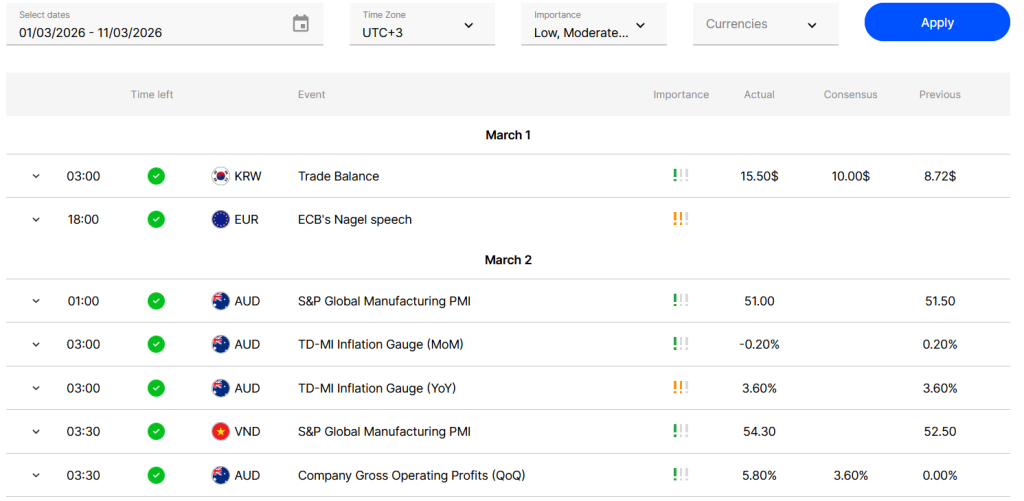
To stay informed, fundamental analysts rely heavily on the economic calendar, a schedule that lists upcoming data releases and events. The economic calendar indicates the expected impact of each release, allowing traders to prepare for periods of heightened volatility. By understanding the fundamental landscape, traders can position themselves ahead of major market moves and avoid being caught off guard by unexpected news.
Technical Analysis
While fundamental analysis looks at why prices move, technical analysis focuses on when to enter and exit trades by studying price charts and statistical patterns. The core premise of technical analysis is that all available information is already reflected in the price, and historical price movements can provide clues about future behavior. Technical analysts believe that price moves in trends and that these trends tend to repeat over time due to human psychology and market behavior.
A wide array of tools and techniques fall under the umbrella of technical analysis. Chart patterns such as head and shoulders, double tops and bottoms, triangles, and flags help traders identify potential trend reversals or continuations. Candlestick patterns, including doji, engulfing patterns, hammer, and shooting star, offer insights into market sentiment and potential turning points at specific price levels. Support and resistance levels represent price zones where buying or selling pressure has historically been strong, making them key areas for placing entries, stop-losses, and take-profits.
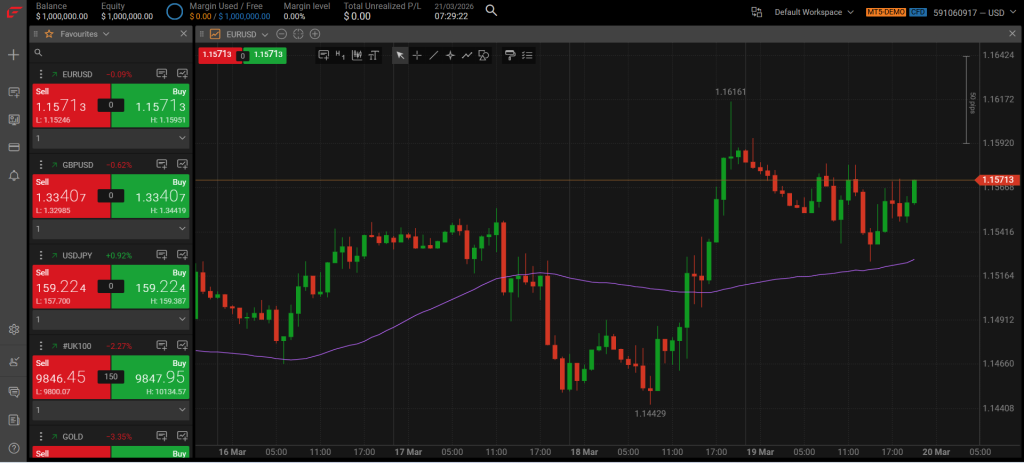
Indicators play a significant role in technical analysis. Moving averages smooth out price data to help identify trend direction and potential crossover signals. The RSI (relative strength index) is a momentum oscillator that measures the speed and change of price movements, helping traders identify overbought or oversold conditions. Fibonacci retracement tools are used to identify potential reversal levels based on the mathematical ratios found in natural sequences, with traders watching for price reactions at key Fibonacci levels such as 38.2%, 50%, and 61.8%.
Price action trading is a discipline within technical analysis that focuses purely on raw price movements without the use of indicators. Price action traders analyze candlestick formations, market structure, and key levels to make trading decisions based on the story the price itself is telling. Trend following is a core principle of technical analysis, operating on the idea that trends tend to persist until evidence of a reversal emerges. Traders use trendlines, moving averages, and higher highs and lower lows to define trend direction and align their trades accordingly.
Ultimately, technical analysis is a tool for gauging market sentiment, which refers to the collective psychology of all market participants. By understanding whether sentiment is bullish, bearish, or indecisive, technical traders can position themselves on the side of the dominant forces in the market. When combined with sound risk management, technical analysis provides a structured framework for making objective trading decisions in a market that can otherwise feel chaotic and unpredictable.
Trading Strategies: Choosing Your Style
One of the first decisions every trader must make is selecting an approach that aligns with their personality, lifestyle, and risk tolerance. The question of forex trading strategies is not about finding a single “best” method, but rather about understanding the available styles and choosing the one that fits individual circumstances. Each strategy differs in terms of time commitment, holding period, profit targets, and risk profile. The table below provides an overview of the main trading styles, followed by a detailed explanation of each approach.
| Strategy | Timeframe | Holding Period | Key Characteristics |
|---|---|---|---|
| Scalping | Seconds to minutes | Ultra-short term | High frequency, many trades, small profit targets, requires intense focus |
| Day Trading | Minutes to hours | Intraday, closed before market close | No overnight exposure, T+0 trading with positions opened and closed same day |
| Swing Trading | Hours to days | Days to weeks | Captures medium-term swings, less time-intensive than day trading |
| Position Trading | Weeks to months | Months to years | Long-term approach based on fundamentals, minimal screen time |
Scalping
Scalping is a trading style characterized by extremely short holding periods, often lasting seconds to a few minutes. Scalpers aim to capture small price movements, sometimes just a few pips, and rely on high trading volume to accumulate profits. This style requires intense focus, rapid decision-making, and the ability to execute trades quickly.
Scalpers typically trade during the most liquid sessions, such as the London-New York overlap, to ensure tight spreads and fast execution. Due to the high frequency of trades, scalping demands low transaction costs and a reliable trading platform with minimal slippage. This approach is best suited for traders who can dedicate full attention to the markets for extended periods and who thrive in fast-paced environments.
Simple Scalping Strategy Based on SMA50
Timeframe: 1-minute chart. Indicator: 50-period Simple Moving Average (SMA50). Trading Session: London-New York overlap. Currency Pairs: EUR/USD or GBP/USD.
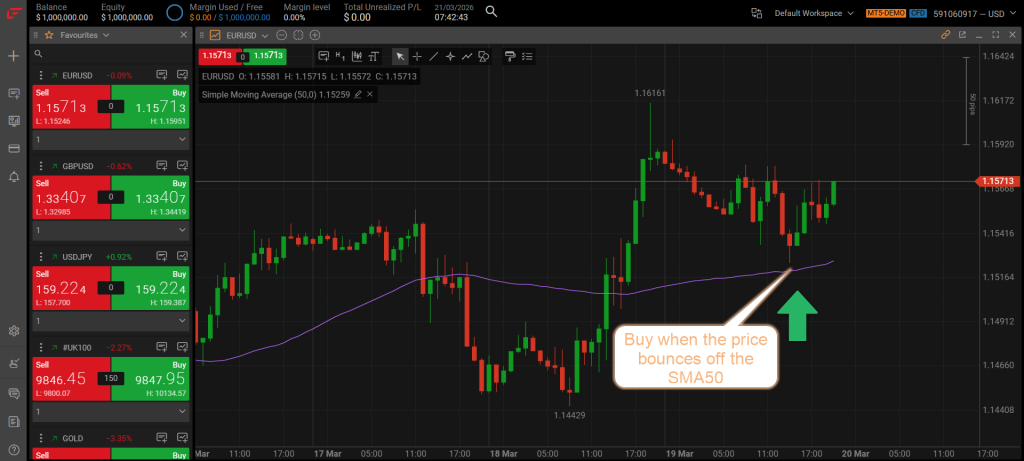
For a long (buy) trade: Price must be above the SMA50 with the SMA50 sloping upward. Enter when price pulls back and touches the SMA50, then forms a bullish candlestick such as a hammer or bullish engulfing. Place the stop-loss 5 pips below the SMA50 and set the take-profit at 10 pips.
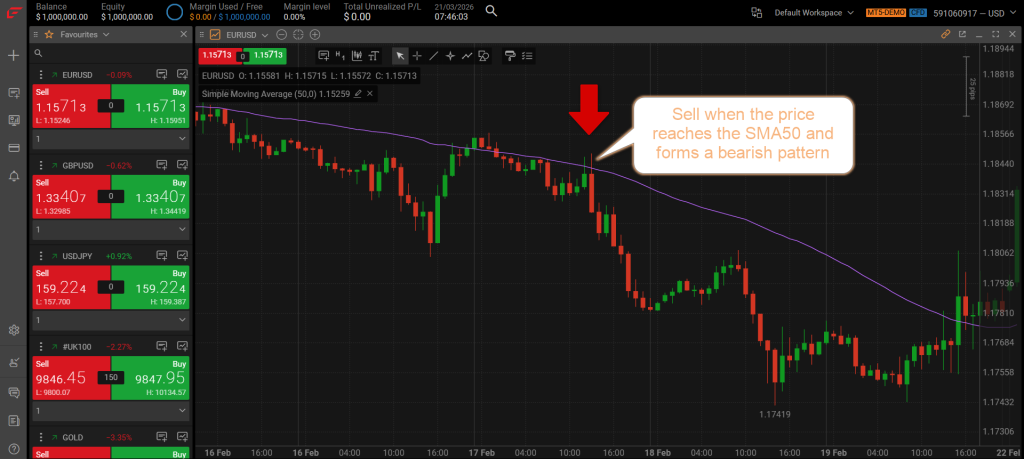
For a short (sell) trade: Price must be below the SMA50 with the SMA50 sloping downward. Enter when price rallies back and touches the SMA50, then forms a bearish candlestick such as a shooting star or bearish engulfing. Place the stop-loss 5 pips above the SMA50 and set the take-profit at 10 pips.
Day Trading
Day trading involves opening and closing positions within the same trading day, ensuring that no position remains open overnight. This style is also referred to as T+0 trading or same-day trading, reflecting the ability to enter and exit trades without holding exposure beyond the daily close. Day traders typically hold positions for minutes to hours, aiming to profit from intraday price movements driven by economic data releases, news events, or technical patterns.
The primary advantage of day trading is the elimination of overnight risk, such as unexpected news or gap openings that can occur when markets are closed. Day traders do not incur overnight financing fees (swap fees) because positions are closed before the end of the trading day. This style requires active screen time and disciplined risk management, as losses can accumulate quickly without proper stop-loss placement. Day trading is popular among traders who prefer to be actively engaged in the markets but want to avoid the uncertainty of holding positions across multiple days.
Swing Trading
Swing trading occupies the middle ground between day trading and long-term investing. Swing traders hold positions for days to weeks, aiming to capture medium-term price swings that occur within a broader trend. This style relies heavily on technical analysis, with traders identifying potential entry points at support and resistance levels, trend pullbacks, or breakout opportunities.
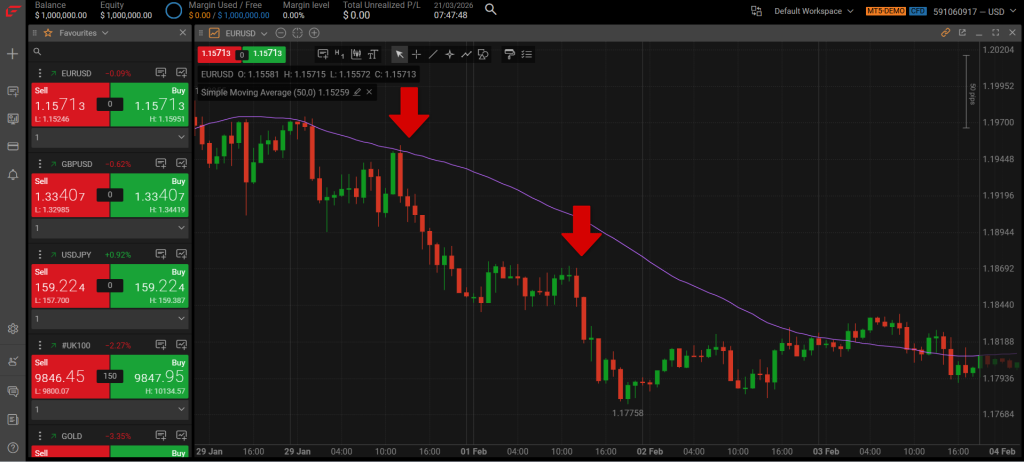
Compared to scalping and day trading, swing trading requires less screen time, making it suitable for traders who have other commitments during market hours. Swing traders typically set wider stop-losses and profit targets to accommodate the larger price movements that occur over several days. While this style reduces the stress of constant monitoring, it does expose traders to overnight and weekend risk, as well as potential overnight financing costs for positions held beyond the daily cutoff. For traders debating forex scalping vs swing trading which is better, the answer depends on individual preferences for time commitment, risk tolerance, and trading psychology.
Position Trading
Position trading is a long-term strategy that focuses on the broader picture rather than short-term fluctuations. Position traders hold positions for months or even years, basing their decisions primarily on fundamental analysis rather than short-term technical signals. This approach aligns with the philosophy of trend following on the largest scale, with traders seeking to capture sustained trends driven by economic cycles, central bank policy shifts, and structural changes in global markets.
Position traders are less concerned with daily price noise and instead focus on factors such as interest rate differentials, economic growth trajectories, and geopolitical developments. This style requires patience and the ability to withstand significant drawdowns without exiting positions prematurely. Position trading demands the least amount of screen time, making it accessible to traders who prefer a more hands-off approach, but it also requires a deep understanding of macroeconomic forces and a willingness to hold through periods of volatility.
Carry Trade (Forex-Specific Strategy)
The carry trade is a unique strategy specific to forex trading that capitalizes on interest rate differentials between two currencies. In a carry trade, a trader buys a currency with a high interest rate while simultaneously selling a currency with a low interest rate. The trader earns the difference between the two interest rates, known as the positive swap or overnight interest, as long as the position remains open.
The classic example of a carry trade is buying the Australian dollar or New Zealand dollar against the Japanese yen, taking advantage of historically higher yields in the former and lower yields in the latter. While interest accumulation is a component of the strategy, carry traders also seek to profit from capital appreciation if the high-yielding currency strengthens against the low-yielding currency. The primary risk of carry trades is that exchange rate movements can quickly outweigh any interest earned, and unexpected central bank policy changes can reverse the interest rate advantage. Carry trades became widely known during the early 2000s and remain a strategy employed by institutional and retail traders alike when interest rate differentials are favorable.
Choosing the right trading strategy is a personal decision that should reflect individual circumstances. New traders are often advised to experiment with different styles using a demo account to determine which approach feels most comfortable before committing real capital. Regardless of the chosen strategy, consistency in execution, adherence to a trading plan, and disciplined risk management remain the cornerstones of long-term success.
Essential Risk Management for Traders
In the world of forex and CFD trading, the ability to generate profits is certainly important, but the ability to protect capital is what separates successful traders from those who do not survive. Risk management is the disciplined practice of identifying, assessing, and controlling potential losses before they occur. No matter how skilled a trader is at analysis or strategy, without proper risk management, a single unfavorable market move can wipe out an account. Understanding how to manage risk in forex trading is therefore the most critical skill a trader can develop.
Risk-Reward Ratio and the 2% Rule
Two foundational concepts in risk management are the risk-reward ratio and the 2% rule. The risk-reward ratio compares the amount of risk taken on a trade to the potential profit. For example, if a trader risks 10 pips to potentially gain 20 pips, the risk-reward ratio is 1:2. Experienced traders typically only take trades where the potential reward is at least equal to or greater than the risk, ensuring that even with a win rate below 50%, profitability remains achievable.
The 2% rule is a widely accepted guideline for capital preservation. It states that a trader should never risk more than 2% of their total trading account on a single trade. For instance, with a $10,000 account, the maximum loss per trade should be $200. This rule ensures that a series of losses will not devastate the account and that the trader can continue to participate in the market while recovering from inevitable losing streaks. Understanding what is the 2% rule in risk management is essential for anyone looking to trade with longevity in mind.
Position Sizing
Position sizing is the mechanism through which the 2% rule is implemented. Once a trader determines how much they are willing to lose on a trade, position sizing calculates the appropriate trade size based on the distance to the stop-loss. For example, if a trader has a $10,000 account and is willing to risk 2% ($200), and the stop-loss is 20 pips away, the trader can calculate the correct lot size so that a 20-pip loss equals exactly $200. Proper position sizing ensures that risk remains consistent across trades, regardless of market conditions or stop-loss distances.
Trading Psychology and Emotional Discipline
Trading psychology plays a crucial role in risk management. Even the best risk management plan is useless if a trader abandons it in the heat of the moment. How to avoid emotional trading in forex begins with accepting that losses are an inevitable part of trading. Fear and greed are the two most destructive emotions: fear causes traders to exit winning trades too early or avoid taking valid setups, while greed leads to overtrading, moving stop-losses, or risking too much on a single trade. Successful traders follow their trading plan without deviation, treating each trade as one of hundreds rather than a life-or-death decision.
Market Volatility and Liquidity
External market conditions also present risks that must be accounted for. Market volatility refers to the magnitude of price fluctuations, and periods of high volatility can cause prices to move rapidly beyond expected levels. During major news events such as interest rate announcements or employment reports, spreads widen dramatically and slippage becomes common. Liquidity refers to the ease with which an asset can be bought or sold without affecting its price. Low liquidity can result in difficulty entering or exiting positions at desired prices. Traders should adjust their position sizes and avoid trading during high-impact news releases unless they have a specific strategy designed for those conditions.
Portfolio Diversification
Finally, portfolio diversification across different asset classes is a powerful risk management tool. While many forex traders focus exclusively on currency pairs, diversification means spreading exposure across uncorrelated markets such as indices, commodities, and stocks. When one asset class experiences a downturn, another may remain stable or even rise. For example, during times of geopolitical uncertainty, currencies may become volatile while gold often strengthens as a safe-haven asset. By diversifying, traders reduce the risk of being overly exposed to a single market or economic event.
In summary, effective risk management is not an afterthought but the foundation upon which all trading activity should be built. By adhering to the risk-reward ratio, the 2% rule, disciplined position sizing, emotional control, awareness of market conditions, and portfolio diversification, traders can protect their capital and position themselves for long-term sustainability.
Conclusion
Understanding what is forex trading and what is CFD trading forms the foundation for anyone looking to participate in the world of online forex trading. As this guide has explored, forex trading involves the exchange of currencies in the world’s largest financial market, while CFD trading offers a versatile derivative product that allows speculation on price movements across a wide range of asset classes without ownership of the underlying asset. Both avenues present significant opportunities, but they also carry inherent risks that must be respected.
Success in these markets does not come from luck or intuition. It requires a commitment to education, a well-structured trading plan, and disciplined risk management. A trading plan outlines entry and exit criteria, risk parameters, and the specific forex trading strategies a trader will employ. Without such a plan, trading becomes little more than gambling. For those new to the space, forex trading for beginners begins with the recognition that markets are complex and that consistent profitability is a skill developed over time, not overnight.
One of the most effective tools for building this skill is the demo account. Understanding what is a demo account and how to use it is essential for novice traders. A demo account allows individuals to practice executing trades, test strategies, and experience market conditions using virtual funds. It provides a risk-free environment to refine technical analysis and fundamental analysis skills, experiment with different timeframes and styles, and build confidence before transitioning to a live account. Treating a demo account with the same seriousness as a real account is key to gaining meaningful experience.
The journey of a trader is one of continuous learning. Mastering trading psychology is just as important as mastering charts and indicators, as emotional discipline ultimately determines whether a trader can stick to their plan during periods of drawdown. Exploring specific strategies such as scalping or swing trading allows traders to discover which style aligns with their personality, time availability, and risk tolerance. As markets evolve, so too must the trader’s knowledge and adaptability.
In closing, the path to becoming a proficient trader is built on a solid foundation of knowledge, a disciplined approach to risk, and consistent practice. By starting with the principles outlined in this guide, committing to ongoing education, and learning how to create a forex trading plan that suits individual goals, traders can navigate the markets with greater confidence and work toward long-term sustainability.
Frequently Asked Questions
What is forex trading for beginners?
Forex trading is the act of buying and selling currencies to profit from exchange rate fluctuations. It operates 24 hours a day through a global over-the-counter (OTC) network where participants trade currency pairs such as EUR/USD or GBP/USD. For beginners, it represents an accessible market with high liquidity, though it requires education and disciplined risk management before trading with real capital.
How does leverage work in forex?
Leverage allows you to control a large position with a small deposit known as margin. For example, 50:1 leverage means that $1 in your account controls $50 in the market. While leverage amplifies profits when trades move in your favor, it also magnifies losses when they move against you. Understanding leverage is essential because it is one of the primary reasons both significant gains and rapid account depletion occur in forex trading.
What is the difference between forex and CFDs?
Forex trading involves direct speculation on currency pairs, where traders exchange one currency for another based on exchange rate movements. CFD trading, or contract for difference trading, is a derivative product that allows you to speculate on price movements of various assets including currencies, stocks, indices, and commodities without ever owning the underlying asset. In short, forex is a specific market, while CFDs are a versatile instrument that can provide access to forex along with many other asset classes.
What are the risks of trading CFDs?
Key risks of CFD trading include high leverage that can lead to magnified losses exceeding your initial deposit, margin calls that require additional funds to maintain open positions, overnight financing fees that accumulate on positions held for more than a day, slippage where orders execute at less favorable prices during volatile conditions, and market volatility that can cause rapid and unexpected price movements. These risks make proper risk management essential for anyone trading CFDs.
How do I manage risk when trading?
Effective risk management involves several practices. Use stop-loss orders on every trade to automatically limit potential losses. Adhere to a risk-reward ratio such as 1:2, meaning you risk one dollar to potentially gain two. Practice position sizing by risking no more than 1% to 2% of your account balance on any single trade. Maintain a trading journal to review your performance, identify patterns, and improve your decision-making over time. Consistency in these practices is the foundation of long-term survival in the markets.
What moves the forex market the most?
The forex market is most heavily influenced by central bank interest rate decisions, which determine the yield differentials between currencies. Economic data releases such as GDP, inflation figures, and employment reports create significant volatility as they signal the health of economies. Geopolitical events including elections, trade disputes, and conflicts can cause sudden shifts in currency values. Market sentiment, reflecting whether traders are risk-seeking or risk-averse, also drives substantial movements across all currency pairs.

