
The hammer pattern is a powerful reversal signal, but even the best candlestick formation won’t save you from poor entry timing. Traders often face a dilemma: should you enter immediately on the close of the hammer, or wait for a retest? This article breaks down aggressive entry vs conservative entry, compares the hammer pattern retest strategy with immediate confirmation, and helps you decide when to enter on a hammer pattern based on your risk tolerance and market conditions.
Understanding the Two Core Entry Approaches
The hammer pattern is one of the most reliable reversal signals in technical analysis, but even a perfect hammer won’t save you from bad entry timing. The entire debate around aggressive entry vs conservative entry comes down to one question: do you trust the signal immediately, or do you wait for proof?
Aggressive Entry means buying the moment the hammer candle closes (or at the open of the next candle). You act on the signal without waiting for additional confirmation. This approach is fast, simple, and ensures you never miss a move.
Conservative Entry means waiting for hammer pattern entry after confirmation – typically a retest of the hammer’s low, a pullback, or a second bullish candle. You sacrifice some profit potential in exchange for higher probability.
Neither approach is universally “better.” Your choice depends on your risk tolerance, trading timeframe, and market conditions. But understanding the mechanics of each will dramatically improve your hammer pattern entry decisions.
The core trade-off is simple: aggressive entries capture more trades but suffer from fakeouts. Conservative entries filter out false signals but risk leaving money on the table. Let’s explore each in depth.
Aggressive Entry: Immediate Execution
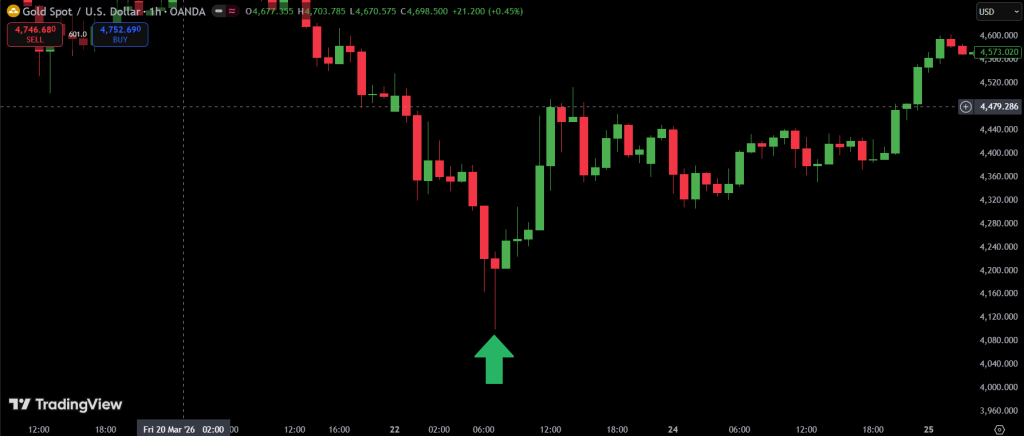
Aggressive entry is exactly what it sounds like. You see a hammer pattern form, you wait for the candle to close, and you enter long immediately, either at the closing price or at the next candle’s open.
How it works in practice:
Identify a clear hammer pattern at a support level or after a downtrend. As soon as the candle closes, place a buy order. Your stop-loss goes below the hammer’s low (typically 5-10 pips or a few cents below the wick). No waiting for retests, no second-guessing.
Pros of aggressive entry:
- You never miss the move. If price reverses hard and never looks back, you’re already in.
- Simple execution. No complex rules for when to enter on a hammer pattern. The signal is the trigger.
- Better risk/reward on fast moves. Your entry price is often closer to the hammer’s close, giving you more room to run.
Cons of aggressive entry:
- Higher fakeout risk. Not every hammer leads to a reversal. Sometimes price briefly pops up then continues down.
- Wider stops required. Since you haven’t confirmed the reversal, you need to give price room to breathe.
- Emotional toll. Taking multiple fakeouts in a row can shake your confidence.
Best market conditions for aggressive entry:
Aggressive entry works best in strongly trending markets or after a clear capitulation drop with high volume. Avoid using it in choppy, sideways markets where hammers form frequently but fail often.
Conservative Entry: The Hammer Pattern Retest Strategy
Conservative entry is the opposite of aggressive. Instead of jumping in immediately, you wait for price to prove the reversal is real. The most reliable conservative method is the hammer pattern retest strategy.
How the hammer pattern retest strategy works:
After the hammer forms, you do nothing immediately. You wait for price to move higher first – at least a few candles in the bullish direction. Then you wait again. This time for price to pull back and retest the hammer’s low or a key Fibonacci level (typically 50-61.8% retracement of the initial bounce).
Only then do you enter.
Step-by-step execution:
- Hammer forms at support after a downtrend.
- Price rallies for 2-3 bullish candles – this is your first confirmation.
- Price begins to pull back toward the hammer’s low.
- You watch for the pullback to show signs of stalling (small bearish candles, long wicks, bullish divergence on RSI).
- Enter long when a bullish candle appears after the pullback stall.
- Place stop-loss a few pips below the hammer’s low.
Pros of the hammer pattern retest strategy:
- Higher win rate. You’re entering only after the market has already shown you strength, then a controlled pullback. This filters out weak hammers that would have failed immediately.
- Tighter stop-loss. Because you’re entering near the hammer’s low, your stop is close, improving risk/reward.
- Less emotional trading. You’re following a clear set of rules for hammer pattern entry after confirmation, not guessing.
Cons of the hammer pattern retest strategy:
- Risk of missing the trade. Sometimes price never retests. It just rallies without you.
- Patience required. A retest can take hours or days to develop.
- False retests. Sometimes price breaks the hammer’s low by a few pips, stops you out, then reverses hard. This is painful but manageable with proper stop placement.
Best market conditions for the hammer pattern retest strategy:
This strategy excels in ranging markets or after moderate trends. It also works well on higher timeframes (4-hour, daily, weekly) where retests are more common and reliable.
Aggressive vs Conservative Entry – Side-by-Side Comparison Table
To help you decide which approach fits your trading style, here’s a direct comparison of aggressive entry vs conservative entry across key metrics.
| Criterion | Aggressive Entry | Conservative Entry (Retest) |
|---|---|---|
| Entry point | Hammer close or next open | After pullback to hammer low (30-62% retracement) |
| Stop-loss distance | Wider – below hammer wick | Tighter – below pullback low or hammer low |
| Win rate | Lower (40-55%) | Higher (60-75%) |
| Risk/reward potential | Higher on explosive moves | Moderate but consistent |
| Missed trades | Few – you’re in almost every hammer | Many – retests don’t always happen |
| Average hold time | Shorter – you catch the entire move | Longer – you wait for setup to develop |
| Psychological difficulty | Handling consecutive fakeouts | Handling FOMO when price doesn’t retest |
| Best timeframe | 1-min to 1-hour | 1-hour to daily |
| Best market condition | Strong trend, high volume | Ranging, choppy, or low volatility |
| Worst market condition | Choppy sideways market | Strong one-way rally without pullbacks |
Which one produces better returns?
The honest answer: it depends entirely on the market environment.
In a strong trend with clean reversals, aggressive entry outperforms. You catch every move, and retests are rare. In a choppy market, conservative entry saves you from endless fakeouts. Your win rate stays high even though you take fewer trades.
Most professional traders use both, switching between aggressive vs conservative entry based on current market conditions. Some even combine them: take a small aggressive position on the hammer close, then add to it on a successful retest.
A simple rule of thumb:
- Average True Range (ATR) expanding? Market has momentum. Go aggressive.
- ATR contracting or flat? Market has no direction. Go conservative with hammer pattern retest strategy.
- Unsure? Default to conservative. You’ll never go broke taking fewer, higher-probability trades.
Conclusion
No single entry method works for every trader or every market. The choice between aggressive entry vs conservative entry comes down to your personality, risk tolerance, and market conditions. Strong trends favor aggressive entry at the hammer close, while choppy markets reward the hammer pattern retest strategy or hammer pattern pullback entry. Learn to read market structure, backtest both approaches, and remember that knowing when to enter on a hammer pattern is a skill developed through experience – not a fixed rule. Trade with a plan, respect your stop-loss, and let your track record guide which method becomes your default.
FAQ – Hammer Pattern Entry Strategies
Which is better – aggressive entry vs conservative entry for the hammer pattern?
Neither is universally better. Aggressive entry captures more trades and works well in strong trends. Conservative entry using the hammer pattern retest strategy delivers a higher win rate but fewer opportunities. Choose based on market conditions: aggressive for trending markets, conservative for ranging markets.
What is the most reliable hammer pattern entry after confirmation?
The hammer pattern confirmation close entry, waiting for the next candle to close above the hammer’s high – is statistically the most reliable method. However, it also offers the smallest reward because you enter late. Reliability comes at the cost of profit potential.
How does hammer pattern pullback entry work in a downtrend reversal?
After a hammer forms and price rallies for 1-3 candles, you wait for a shallow pullback (30-50% of the rally) that shows signs of stalling – small bearish bodies, long lower wicks, or bullish divergence on RSI. You then enter on the next bullish candle. This filters out weak reversals while still offering better entry than a full retest.
When to enter on a hammer pattern for day trading vs swing trading?
Day traders often prefer aggressive entry or hammer pattern pullback entry because retests may not happen within the same session. Swing traders and position traders benefit more from the hammer pattern retest strategy or hammer pattern confirmation close entry, as higher timeframes produce more reliable retests.
Can I combine aggressive and conservative entries on the same hammer?
Yes. Many professional traders use a hybrid approach: enter a small position aggressively (25-50% of normal size) at the hammer close. If price retests successfully, add the remaining position. This gives you exposure to the full move while limiting downside if the initial signal fails.
What stop-loss placement works best for hammer pattern entry after confirmation?
For aggressive entry, place stops 5-10% below the hammer’s wick. For hammer pattern retest strategy, place stops just below the retest low (which is often above the original hammer low). For hammer pattern confirmation close entry, place stops below the confirmation candle’s low. Always give the market room – too tight stops get hunted.
Which timeframe produces the most reliable hammer pattern pullback entry?
The 1-hour and 4-hour timeframes offer the best balance. Lower timeframes (1-15 minutes) produce too much noise. Higher timeframes (daily, weekly) produce reliable signals but require more patience for pullbacks to develop. Start with 4-hour charts if you’re new to pullback entries.

