

The hammer pattern is one of the most popular single-candle reversal setups. Many traders spot it, buy immediately, and then watch price reverse against them. To succeed, you need to understand exactly how to trade hammer pattern correctly, not just recognize the candle but follow strict rules for entry, stop loss, and take profit.
Most traders lose money on hammer patterns not because they enter at the wrong time. They lose because they ignore hammer pattern risk reward ratio. You can have a perfect entry and still blow your account if your targets are too small or your stops are too wide. This guide will teach you the complete system from identification to exit.
What Is a Hammer Pattern?
A hammer is a single candlestick that forms after a downtrend. It has a small body at the top end of the candle and a long lower wick that is at least twice the length of the body. The upper wick is very short or nonexistent.
This shape tells a story. Sellers pushed prices lower during the period, but buyers stepped in aggressively and pushed prices back up to close near the high. This rejection of lower prices signals that momentum may be shifting from bearish to bullish. However, the hammer alone is not a trade signal. You still need a hammer pattern confirmation candle to validate the reversal before entering a trade.
Core Rules: How to Trade Hammer Pattern
First Step: Wait for a Downtrend
Before you even think about entering a trade, you must confirm that the market is in a clear downtrend. A hammer appearing in an uptrend or a sideways market is not a reversal signal. In an uptrend, the same candle shape is called a hanging man, and it signals a potential reversal down, not up.
Look for at least three to four consecutive lower highs and lower lows on your chosen timeframe. The stronger the downtrend, the more reliable the hammer signal. This is the foundation of how to trade hammer pattern correctly. Without a downtrend, you have no trade.
Hammer Pattern Entry Points
Once you have identified a valid hammer after a downtrend, you need to choose your hammer pattern entry points. There are two main approaches.
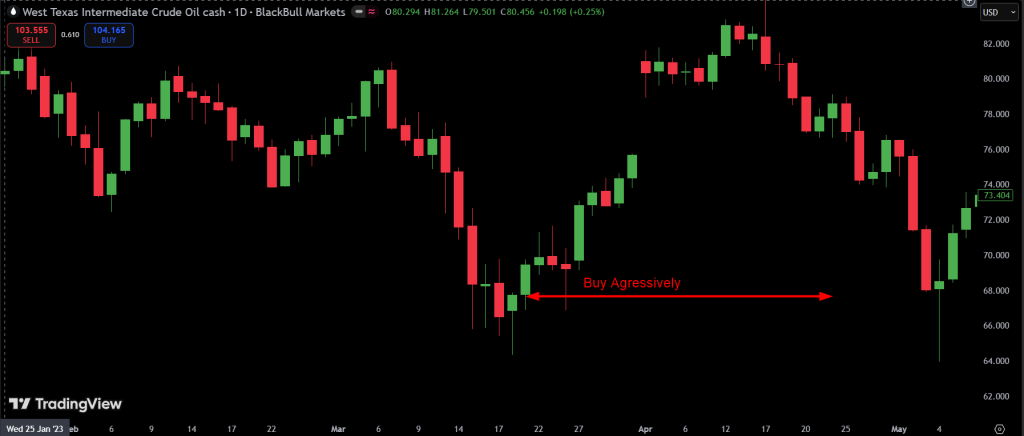
The aggressive entry is to buy immediately at the close of the hammer candle. This gives you a better risk reward ratio because you enter earlier, but it carries higher risk of a fakeout.
The conservative entry is to wait for the next candle to close above the hammer’s body. This provides confirmation that buyers are truly in control. Most professional traders prefer the conservative entry because it filters out false signals, even though the entry price is slightly worse.
Hammer Pattern Stop Loss Placement
After you have entered the trade, the next critical decision is where to place your stop loss. Proper hammer pattern stop loss placement is what separates traders who survive from those who get wiped out on a single bad trade.
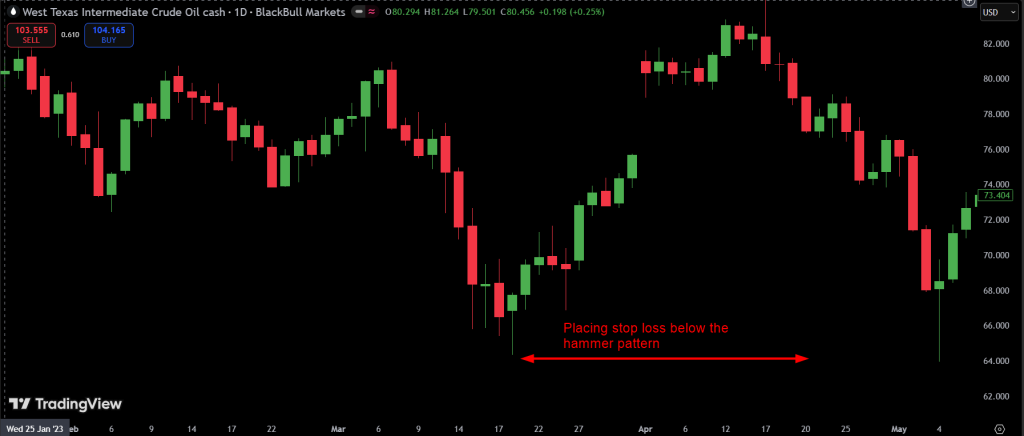
The standard rule is to place your stop loss five to ten pips, or 0.05 percent, below the low of the hammer’s long lower wick. This wick represents the extreme point where sellers pushed price down before buyers took over. If price falls below this level, it means the rejection of lower prices has failed and the reversal signal is invalid. Never place your stop loss inside the wick. Market makers and institutions often hunt stops placed inside the wick, and you will get stopped out before the real move begins. For higher timeframes like the four hour or daily chart, you may need a wider stop below the recent swing low to account for normal market noise.
Hammer Pattern Take Profit Levels
Once your stop loss is set, you need to decide where to take profits. Your hammer pattern take profit levels should always be based on a multiple of your risk, not on random price levels or emotions.
The most common approach is to set two take profit targets. The first target is a one to one risk reward ratio, meaning you take profit at a distance equal to your stop loss. This is often placed at the nearest resistance level or recent swing high. The second target is a one to two or one to three risk reward ratio, which is twice or three times the distance of your stop loss. A good rule is to take fifty percent of your position off at the first target and move your stop loss to breakeven. Then let the remaining fifty percent run to the second target. This way, even if price reverses after the first target, you still lock in some profit and take zero risk on the remainder of the trade.
Hammer Pattern Risk Reward Ratio
Your hammer pattern risk reward ratio is the single most important number in your trading plan. It tells you how much profit you expect to make for every dollar you risk. Without a positive risk reward ratio, even a high win rate strategy will eventually lose money.
The minimum acceptable risk reward ratio for any hammer trade is one to two. This means if you risk ten pips on your stop loss, your take profit should be at least twenty pips away. To calculate this, measure the distance from your entry to your stop loss, then multiply that distance by two. Place your first take profit target at that level. For example, if you enter at 1.1000 and your stop loss is at 1.0990, you are risking ten pips. Your minimum take profit should be at 1.1020, which is twenty pips above your entry. With a one to two ratio, you can win only fifty percent of your trades and still be profitable. If you aim for one to three, you can win just forty percent of your trades and still come out ahead.
Hammer Pattern Confirmation Candle
The hammer pattern confirmation candle is the filter that separates amateur traders from professionals. Many beginners see a hammer and buy immediately without waiting for confirmation. This is a costly mistake.
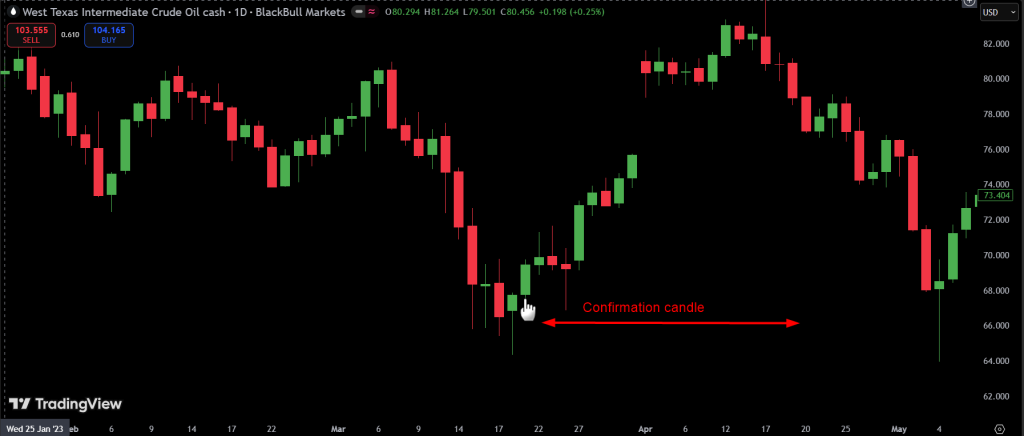
A confirmation candle is simply the next candle after the hammer closes. For the signal to be valid, this candle must close above the body of the hammer. This tells you that buyers have returned on the next period and are willing to push prices higher. Without this confirmation, the hammer is just a warning, not a trade signal. With confirmation, your win rate can improve from around forty to fifty percent to sixty to seventy percent. The only time you might skip waiting for confirmation is on very high timeframes like the weekly chart, where waiting for another candle could take seven days. But for daily and intraday trading, always wait for the confirmation candle before entering.
What to Do After Hammer Pattern Appears
Now that you understand each rule individually, let us put them together into a complete step by step sequence. This is exactly what to do after hammer pattern appears on your chart. Follow these eight steps on every hammer pattern, and you will have a mechanical system that removes emotion from your trading.
- Do not enter immediately when you see the hammer. Wait for the candle to close so you can see the full shape.
- Check that volume is higher than the previous few candles. Higher volume confirms that institutions are participating in the rejection of lower prices.
- Wait for the next candle to close above the hammer’s body. This is your confirmation candle.
- Choose your entry. The conservative entry at the close of the confirmation candle is recommended for most traders.
- Place your stop loss five to ten pips below the hammer’s low.
- Set your take profit levels using a minimum one to two risk reward ratio.
- After the first target is hit, move your stop loss to breakeven.
- Let the remaining position run to the second target or until the trend shows signs of reversing.
Common Mistakes to Avoid
Even with all the right rules, traders still lose money on hammer patterns by making the same mistakes over and over again. Here are the most common ones to avoid.
- Buying a hammer in an uptrend. The same candle shape in an uptrend is called a hanging man, and it signals a potential reversal down, not up.
- Placing your hammer pattern stop loss placement inside the wick. Institutions can see where retail stop orders are clustered, and they often push price into the wick to trigger those stops before continuing higher.
- Taking profit at one to one hammer pattern risk reward ratio. If you only aim for one to one, you need a win rate above fifty percent just to break even.
- Skipping the hammer pattern confirmation candle. A hammer without confirmation is just a warning, not a trade signal.
- Trading hammers in a sideways market. The hammer is a reversal pattern, not a range trading pattern.
Real Trading Example
Let us walk through a real trading scenario to see exactly how to trade hammer pattern from start to finish. This example uses the EUR/USD pair on the four hour chart.
The pair has been in a clear downtrend for several days, forming four consecutive lower highs and lower lows. Price reaches a support level at 1.0850. A hammer candle forms here with a small body at the top and a long lower wick reaching down to 1.0830. The body closes at 1.0855. Volume on this hammer is higher than the previous three candles, confirming institutional interest.
The next candle opens at 1.0855 and closes at 1.0875, which is above the hammer’s body. This is your confirmation candle. You choose the conservative entry at the close of the confirmation candle, which is 1.0875. Your stop loss goes five pips below the hammer’s low at 1.0825. Your risk is 50 pips. Using a one to two risk reward ratio, your take profit is set at 1.0975, which is 100 pips above your entry. The trade reaches the target two days later.
Conclusion
The hammer pattern is a powerful reversal signal, but only when traded with discipline. You now know the complete system, from identifying a valid hammer to exiting with a profit.
Never forget the two most important lessons from this guide. First, always wait for the hammer pattern confirmation candle before entering a trade. This single rule will save you from countless fakeouts. Second, now you know exactly what to do after hammer pattern appears by following the eight step checklist. Without these two pillars, even a perfect hammer setup will lose money over time. Master the confirmation candle and the step by step process, and you will trade the hammer pattern with confidence.
FAQ
What is the best hammer pattern entry point?
The conservative entry after the confirmation candle is best for most traders. It provides a higher win rate by filtering out false signals.
Where should I place my hammer pattern stop loss?
Place your stop loss five to ten pips below the hammer’s low, never inside the wick. This protects you from stop hunting by institutions.
How do I set hammer pattern take profit levels?
Use a minimum one to two risk reward ratio. Set your first target at a distance equal to twice your risk, usually at the nearest resistance level.
What is a good risk reward ratio for hammer trades?
Minimum one to two. Ideal one to three. Never take a hammer trade with less than one to two.
Do I need a confirmation candle after a hammer pattern?
Yes. Without a confirmation candle, your win rate drops significantly. Always wait for the next candle to close above the hammer’s body.
What to do after hammer pattern appears?
Follow the eight step checklist. Wait for the candle to close, check volume, wait for confirmation, choose your entry, set stop loss, set take profit, move stop to breakeven after first target, and let the remainder run.
How to trade hammer pattern on higher timeframes?
The same rules apply. Use wider stops and larger targets. On weekly charts, you may skip waiting for confirmation because it takes seven days, but on daily and lower timeframes, always wait.

